Erayo Foundation is created, launching with our pilot project: providing 300 books to cover a basic library for a non-profit school in Somalia.
We have sourced our first set of children's books in Somali for the pilot library collection.
Collaborating on the mission to deliver a basic library of 300 books for their students
A future goal for Erayo Foundation: a permanent, free public library space in Mogadishu for all. There is no set timeline for this yet.
Provide 300 books to cover the basic library for a non profit school of 300 students
Our future ambition is a free public library in Mogadishu, a permanent community space where Somali readers of all ages can learn and grow. This is a long-term goal we are working towards, beyond our current pilot project.
Many children grow up without access to books or safe reading spaces, limiting education, opportunity, and imagination.
In 2025, 3.4 million children in Somalia were out of school, highlighting the scale of the education gap.
Erayo Foundation exists to change that by building a future where reading is shared, supported, and accessible to all.
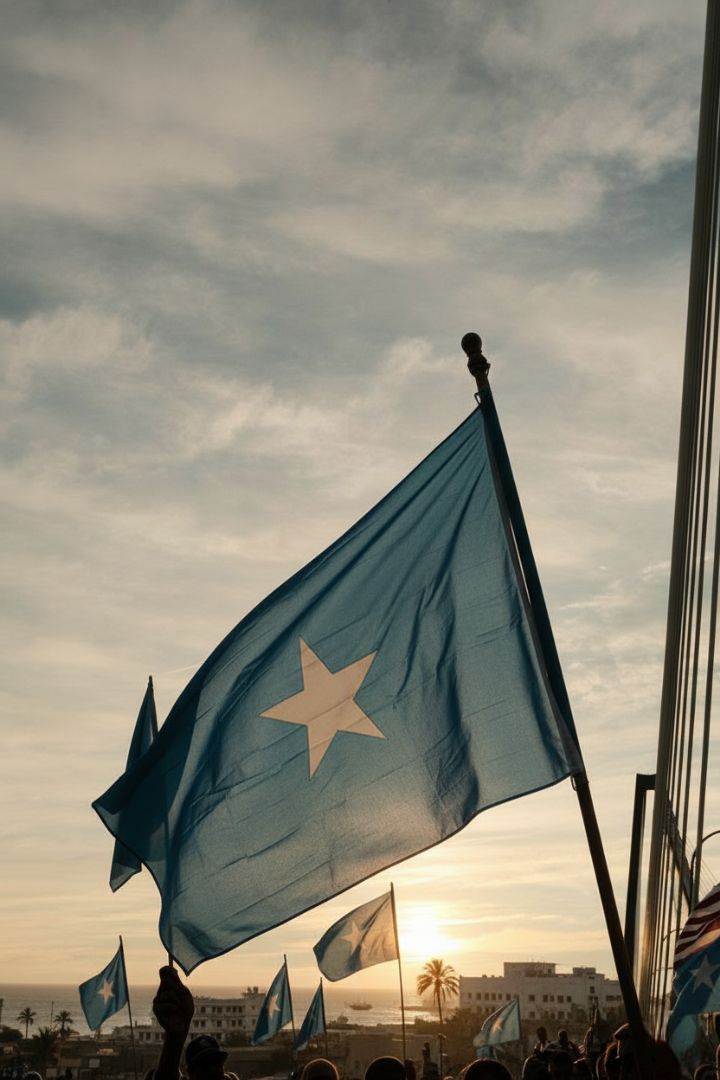
Our first mission is a pilot project: providing 300 books to cover a basic library for a non-profit school of 300 students in Somalia. We believe every student deserves the chance to read, learn, and be inspired, regardless of background or access.
Looking further ahead, our long-term goal is to build a free public library in Mogadishu, a permanent community space where Somali readers of all ages can access books and learn. This remains a future ambition we are working towards.
Volunteering with Erayo Foundation involves supporting a wide range of activities, from sourcing and curation, to running programs, community outreach, event support, and authoring content.
Our current volunteer cycle has ended, but the next one will take place at the end of 2026-2027. More details will be announced closer to the time.
Thank you,
Asmaa
Our partnership applications are currently closed.
We truly value collaborations with organisations, academic institutions, and store owners who share our vision. Partnership opportunities may reopen in the future, with further updates provided closer to the time.
For any questions, please feel free to reach out at partner@erayofoundation.com.
If you have any questions, partnerships, or general enquiries, feel free to reach out to us.
You will be redirected to our Stripe page. Erayo Foundation is a non-profit organisation. Every contribution, big or small, makes a real difference.
Every time another humanitarian crisis dominates our timelines, the same conversation begins. Which crisis deserves our attention? Which people need us the most? Which charity can we trust?
Maybe we are asking the wrong question altogether.
For decades, as a society, we have shaped the idea of the “perfect victim,” exploiting the most vulnerable narratives to sustain an appetite for suffering. Today, many Muslim, African, Asian and Arab communities are confronting the painful reality that their reality is often framed as inevitable through the way it is portrayed in the media.
So where do we go from here?
The difference between us and the people in need isn't money or geographical location; it's the freedom to say no, without repercussions.
Money doesn't just buy food, shelter, and comfort. It buys privacy. It allows you to choose which parts of your life remain private and what narratives shape your identity.
However, for many people around the world, these choices disappear. A photograph of the worst moment of your life shapes your identity and becomes a fundraising campaign that lives on the internet forever.
As a Somali woman, I often think about the images that shaped how the world saw Somalia throughout the 1990s and early 2000s. Starving children became the country's identity for many years. This isn't a small effect. It changed how businesses, governments, and ordinary people perceived investing in Somalia and rebuilding a functioning society.
I ask a single question.
Do you really dislike exploitative images and videos of children and adults who need help, when the numbers show they generate the most engagement and raise the most money?
We aren't just spectators who watch what humanitarian organisations publish. We created the demand. We taught ourselves that suffering must be televised, that pain must be visible before compassion becomes possible.
I am the founder of Erayo Foundation, a Somali grassroots social enterprise with a mission to open a public library, beginning with a pilot project to provide 300 books to 300 students.
We create informative videos and carousels for TikTok and Instagram, constantly trying to find new ways to educate the public about the literacy crisis in Somalia while raising money to fund our pilot project.
The question sits with me every day. I know what people are looking for: something that makes them stop scrolling, something that evokes emotion, something that confirms an undeniable crisis.
Perhaps a photograph of a child who isn't in school, selling food on the street. Or a video of a child watching others read books they will never own.
But at Erayo Foundation, we stand firm that children should become students before they become photographs.
Don't wait until someone's worst day becomes tomorrow's fundraising campaign. Help while hope is still part of the story.